What Are Exit Interview Questions?
Exit interview questions are a set of carefully planned questions that employers, HR professionals, or managers ask a departing employee before their last working day. The goal is to understand why the employee is leaving, learn about their overall experience, and collect honest feedback that can help improve the workplace, management practices, and the employee experience.
The best exit interview questions are open-ended, unbiased, and focused on gathering meaningful insights rather than simple yes-or-no answers. Whether you're looking for good exit interview questions, exit interview questions to ask an employee, or sample exit interview questions, the right questions can reveal valuable information about workplace culture, leadership, communication, career growth, training, compensation, and daily responsibilities.
In this guide, you'll find the best exit interview questions to ask, practical examples, and exit interview questions and answers that help you run more productive conversations and turn employee feedback into meaningful improvements. If you're also planning employee shifts and managing your team's day-to-day operations, using an employee schedule maker can help create organized schedules and improve workforce coordination alongside a better offboarding process.
Instead of asking random questions, use a structured list of common exit interview questions that encourages honest feedback while keeping the conversation professional, respectful, and valuable for both the employee and the organization.
Turn Employee Feedback into Better Staff Scheduling
Use employee feedback to create smarter schedules with our Staff Scheduling Software.
Start free today.35 Best Exit Interview Questions to Ask Employees
The best exit interview questions help employers and HR teams understand why an employee is leaving and identify opportunities to improve the workplace. Instead of asking random questions, use a structured approach that encourages honest feedback and meaningful conversations.
Below, you'll find 35 carefully selected exit interview questions to ask employees, grouped by topic for easier use. Each question includes a brief explanation of why it matters and what you can learn from the employee's response, helping you conduct more effective exit interviews and make informed workplace improvements.
Related Read
Questions to Understand Why the Employee Is Leaving
Understanding why an employee chooses to leave is one of the most valuable parts of any exit interview. These exit interview questions help employers identify the real reasons behind a resignation, uncover recurring workplace issues, and gather honest feedback that can improve the employee experience for future team members.
- 1What influenced your decision to leave the company?
- 2Was there a specific event that contributed to your decision?
- 3What could we have done differently to encourage you to stay?
- 4What attracted you to your new opportunity?
- 5Did you share your concerns before deciding to leave?
What You Can Learn:
The answers can reveal common reasons employees leave, such as limited career growth, management challenges, compensation concerns, workload, or workplace culture. Looking for recurring patterns helps HR teams make informed improvements and reduce future employee turnover.
Questions About the Employee's Overall Experience
A successful exit interview should go beyond understanding why an employee is leaving. It should also explore their overall experience with the company. These good exit interview questions help you identify what employees appreciated most, what needs improvement, and which areas contribute to long-term employee satisfaction.
- 1How would you describe your overall experience working here?
- 2What did you enjoy most about working here?
- 3What did you enjoy least about working here?
- 4Did you feel valued and recognized for your contributions?
- 5Would you recommend this company as a place to work? Why or why not?
What You Can Learn:
Employee feedback can highlight your organization's strengths while uncovering opportunities to improve leadership, communication, recognition, teamwork, and the overall work environment. This insight helps create a more positive employee experience for both current and future employees.
Questions About the Role and Daily Responsibilities
Role-specific exit interview questions to ask employees help you understand whether the position matched expectations and whether employees had the support they needed to succeed. The feedback collected here can improve job descriptions, onboarding, training, and day-to-day operations for future hires.
- 1Did your role match the expectations you had when you joined?
- 2Did you have the tools and resources needed to do your job effectively?
- 3How did your responsibilities change over time?
- 4Was your workload manageable?
- 5Is there anything about this role that you believe should be improved?
What You Can Learn:
These responses can reveal gaps in role expectations, workload distribution, training, resources, or internal processes. Addressing these issues helps create clearer roles, improve productivity, and provide a better experience for future employees.
Questions About Managers and Leadership
Strong leadership plays a key role in employee satisfaction, communication, and long-term retention. These best exit interview questions help employers understand how employees viewed their managers, whether they felt supported, and where leadership can improve.
- 1How would you describe your relationship with your manager?
- 2Did your manager provide regular feedback and support?
- 3Did you feel comfortable sharing concerns with your manager?
- 4What could your manager have done differently to help you succeed?
- 5Is there anything leadership should know about your experience?
What You Can Learn:
These responses can reveal strengths and gaps in communication, coaching, recognition, and leadership support. Identifying recurring feedback helps managers build stronger relationships with employees and create a more supportive workplace.
Questions About Workplace Culture and Team Environment
A positive workplace culture encourages collaboration, trust, and employee engagement. These common exit interview questions help you understand how employees experienced the company's culture, team dynamics, and day-to-day work environment.
- 1How would you describe our workplace culture?
- 2Did you feel respected and included by your team?
- 3Did you have a healthy work-life balance?
- 4What did you enjoy most about working with your team?
- 5What changes would make this a better place to work?
What You Can Learn:
Employee feedback can uncover patterns related to collaboration, inclusion, communication, workload, and team relationships. These insights help organizations strengthen their culture and improve the overall employee experience.
Questions About Career Growth and Development
Employees often leave when they feel their career has stopped progressing. These exit interview questions to ask employees help employers understand whether team members had opportunities to learn, grow, and achieve their professional goals during their time with the organization.
- 1Did you have enough opportunities for career growth?
- 2Were the training and development opportunities helpful?
- 3Did you have clear career goals and expectations?
- 4Did you receive the support you needed to develop new skills?
- 5What could we do to better support employee growth in the future?
What You Can Learn:
These answers show whether employees felt supported in their professional development and whether existing training, mentoring, or career planning programs meet their needs. Improving these areas can increase employee satisfaction and encourage long-term retention. If feedback highlights concerns about performance expectations or development conversations, reviewing effective performance review practices can also help managers provide more meaningful guidance throughout the employee journey.
Questions About Compensation, Benefits, and Work Conditions
Compensation isn't always the main reason employees leave, but it often influences their final decision. These exit interview questions to ask help you understand whether salary, benefits, workload, or working conditions met employee expectations and supported long-term job satisfaction.
- 1Did you feel your compensation was fair for your role and responsibilities?
- 2Were the benefits and employee programs valuable to you?
- 3Did your workload allow you to maintain a healthy work-life balance?
- 4Were there any workplace conditions that made it difficult to perform your job effectively?
- 5What improvements would you suggest to make this a better place to work?
What You Can Learn:
Employee feedback can highlight concerns about compensation, benefits, workload, flexibility, or workplace conditions. Reviewing common patterns helps employers make informed decisions that improve employee satisfaction, strengthen retention, and create a better work environment.
Final Exit Interview Questions
Before ending the conversation, ask a few final exit interview questions that give employees an opportunity to share anything that hasn't been discussed. These open-ended questions often reveal valuable insights that structured questions may miss.
- 1Is there anything we haven't discussed that you'd like to share?
- 2What advice would you give to someone joining this role?
- 3Under what circumstances would you consider returning to the company?
- 4What is the most important change you would recommend we make?
- 5Is there anything else you'd like leadership to know before you leave?
What You Can Learn:
Final feedback often uncovers ideas, concerns, or positive experiences that employees didn't mention earlier. These insights can help organizations improve leadership, strengthen workplace culture, and make better decisions for future employees.
Tips for Asking Exit Interview Questions Effectively
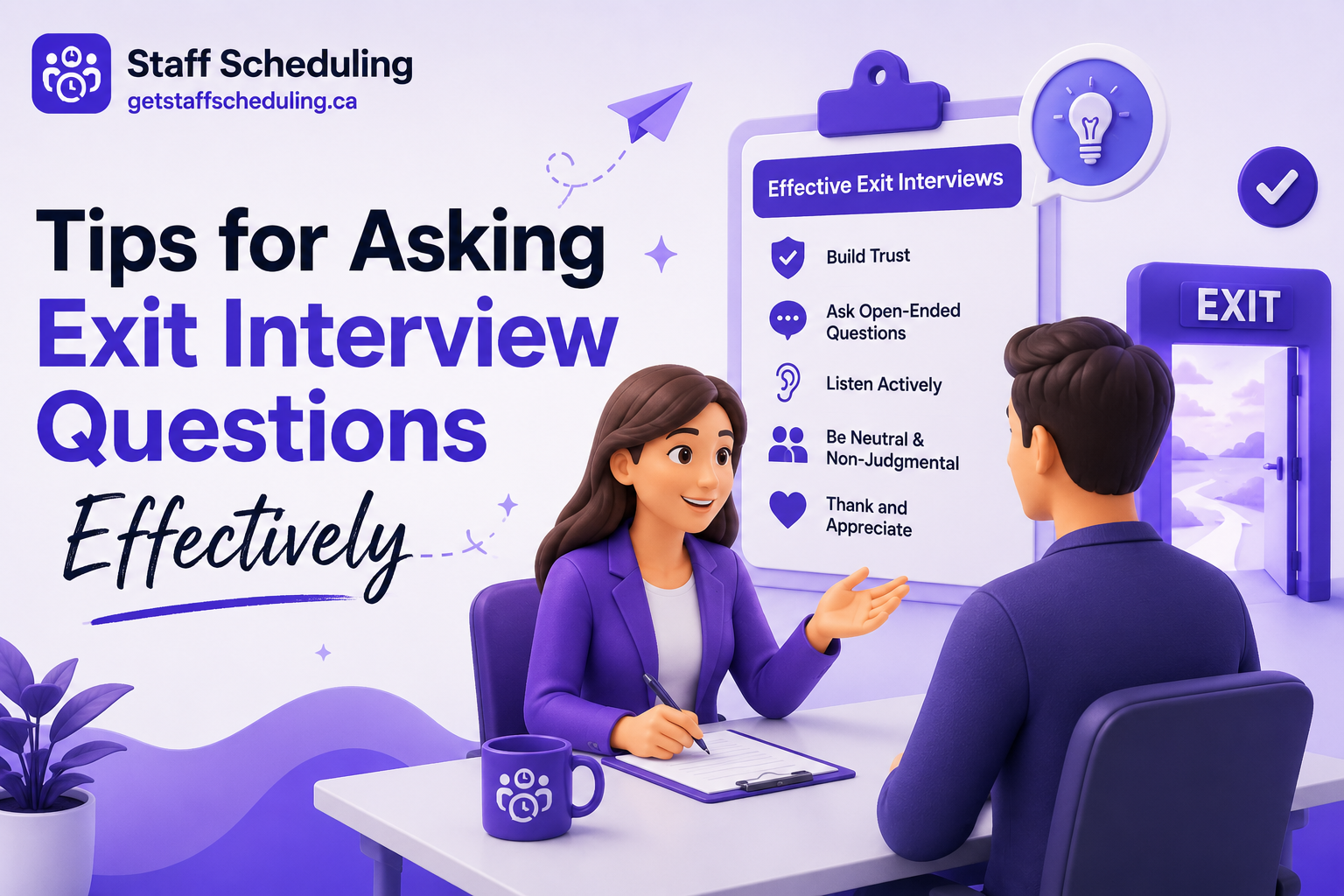
Choosing the right exit interview questions is only part of a successful conversation. How you ask those questions can make a big difference in the quality of feedback you receive. Whether you're using good exit interview questions, common exit interview questions, or exit interview questions to ask employees, these practical tips will help you create a comfortable environment where employees feel confident sharing honest and constructive feedback.
1. Ask Open-Ended Questions
Encourage employees to explain their experiences in their own words instead of giving simple yes-or-no answers. Open-ended questions often lead to more meaningful and actionable feedback.
2. Create a Comfortable and Private Environment
Choose a quiet, private setting where employees can speak openly without feeling pressured or judged. A respectful atmosphere helps build trust and encourages honest conversations.
3. Listen Without Interrupting
Allow employees to finish their thoughts before responding. Listen carefully, avoid becoming defensive, and focus on understanding their perspective rather than explaining company decisions.
4. Ask Follow-Up Questions When Needed
If an employee shares an important concern, politely ask follow-up questions to better understand the situation. Specific examples often provide more valuable insights than general comments.
5. Stay Neutral and Respectful
Avoid leading questions or language that could influence the employee's response. Keep the conversation professional, unbiased, and focused on learning from their experience.
6. End the Conversation on a Positive Note
Thank the employee for their time, honesty, and contributions. Ending the interview respectfully leaves a positive final impression and reinforces a culture of open communication.
Best Practice:
The best exit interview questions don't just collect feedback—they encourage honest conversations that help organizations improve leadership, workplace culture, employee experience, and future retention.
Exit Interview Questions to Avoid for Honest Employee Feedback
Asking the right exit interview questions is important, but avoiding the wrong ones is equally essential. Poorly worded questions can make employees feel uncomfortable, defensive, or unwilling to share honest feedback. If your goal is to collect meaningful insights, avoid these common mistakes during an exit interview.
1. Leading Questions
Leading questions suggest the answer you expect, making it harder to receive honest feedback.
Avoid asking:
- You didn't have any problems with your manager, right?
Ask instead:
- How would you describe your relationship with your manager?
2. Judgmental Questions
Questions that sound critical or blaming can discourage employees from speaking openly.
Avoid asking:
- Why didn't you work harder to solve the problem?
Ask instead:
- What challenges made your work more difficult?
3. Emotional or Defensive Questions
An exit interview should focus on learning, not defending company decisions. Emotional responses can reduce trust and limit valuable feedback.
Avoid asking:
- Don't you think you're making the wrong decision?
Ask instead:
- What influenced your decision to leave?
4. Questions That Pressure Employees
Employees should never feel forced to answer questions they're uncomfortable discussing. Respectful conversations lead to more honest and useful responses.
Avoid asking:
- Tell us every negative thing about your manager.
Ask instead:
- Is there any feedback you'd like to share about your management experience?
5. Multiple Questions at Once
Asking several questions together often leads to incomplete or confusing answers.
Avoid asking:
- Were you happy with your salary, manager, workload, and career opportunities?
Ask instead:
- Ask each question separately to give employees enough time to provide thoughtful answers.
Key Takeaway:
The best exit interview questions are open-ended, respectful, and unbiased. They encourage honest conversations, help employers gather meaningful employee feedback, and provide valuable insights that support better workplace decisions.
Exit Interview Checklist: Before, During, and After the Interview
A well-planned exit interview is more than asking the right questions. Following a simple checklist helps employers and HR teams collect honest employee feedback, keep the conversation professional, and turn insights into meaningful workplace improvements.
Before the Interview
- Review the employee's role, responsibilities, and employment history.
- Prepare a list of exit interview questions that match the employee's experience.
- Choose a private and comfortable location for the conversation.
- Schedule enough time so the interview doesn't feel rushed.
- Explain that the discussion is confidential and intended to gather honest feedback.
During the Interview
- Start with friendly, open-ended exit interview questions to make the employee feel comfortable.
- Listen carefully without interrupting or becoming defensive.
- Ask follow-up questions when clarification is needed.
- Take notes on key feedback and recurring concerns.
- Thank the employee for sharing their honest thoughts and experiences.
After the Interview
- Review the feedback and identify common themes or patterns.
- Share important insights with HR or leadership when appropriate.
- Create an action plan to address recurring issues.
- Use the feedback to improve employee experience, workplace culture, and future retention efforts.
- Keep the information confidential and use it only for organizational improvement.
The value of an exit interview doesn't come from asking more questions—it comes from listening carefully, identifying patterns, and taking action on the feedback employees provide.